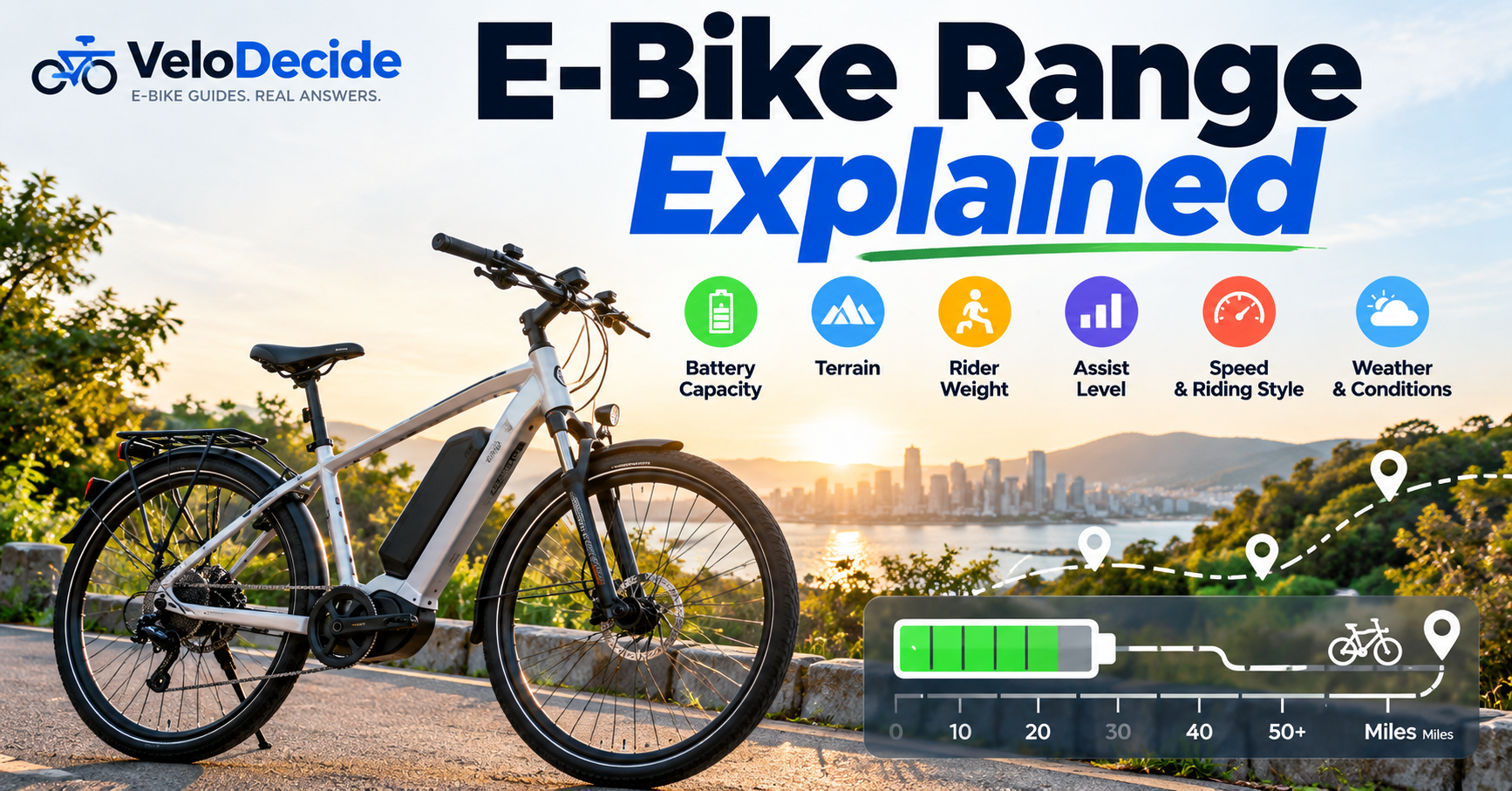
E-bike range is the distance an electric bike can travel on a single battery charge. But advertised range and real-world range can be very different. Rider weight, terrain, assist level, speed, weather, tire pressure, and battery capacity can all affect how far an e-bike actually goes.
Quick Answer: How Far Can an E-Bike Go?
There is no single range number that applies to every e-bike or every rider. Manufacturer estimates are useful for comparison, but actual range depends heavily on riding conditions and how much motor assistance you use.Battery capacity: Larger batteries generally store more energy.Assist level: Higher assistance usually consumes battery power faster.Rider and cargo weight: Heavier loads generally require more energy.Terrain: Hills and frequent starts can reduce range.Speed and riding style: Higher speeds and aggressive acceleration can increase energy use.Weather and conditions: Cold temperatures, wind, tire pressure, and road surface can affect efficiency.
1. Understand E-Bike Battery Capacity
Battery capacity is one of the most important factors affecting e-bike range. It is usually measured in watt-hours (Wh), which indicates how much electrical energy the battery can store.What Does Wh Mean?
Watt-hours provide a useful way to compare battery sizes. For example, a 500Wh battery stores more energy than a 400Wh battery, but that does not automatically mean the bike will travel 25% farther. Motor efficiency, rider weight, terrain, speed, and assist level also affect energy consumption.How Is Battery Capacity Calculated?
Battery capacity in watt-hours can usually be estimated by multiplying battery voltage by amp-hours.Wh = Volts (V) × Amp-hours (Ah)
For example, a 48V battery rated at 10Ah has a nominal capacity of approximately 480Wh.
Does a Bigger Battery Always Mean More Range?
Generally, more battery capacity provides more potential range, but battery size should not be evaluated in isolation. Two e-bikes with the same battery capacity can deliver different real-world range because of differences in motor efficiency, bike weight, tires, gearing, riding conditions, and rider behavior.2. Advertised Range vs. Real-World Range
E-bike manufacturers often publish estimated range figures, but these numbers are usually based on specific test conditions. Real-world riding rarely matches those conditions exactly, so actual range can be lower or higher depending on how and where you ride.Why Advertised Range Can Be Misleading
A published maximum range may assume a lighter rider, low assistance, moderate speed, flat terrain, favorable weather, and a fully charged battery. If your riding conditions are more demanding, you should not expect to consistently achieve the maximum advertised figure.What Reduces Real-World Range?
- Higher assist levels: More motor assistance generally uses battery energy faster.
- Hills: Climbing requires substantially more energy than riding on flat terrain.
- Heavier loads: Rider weight, cargo, and accessories increase the energy required to move the bike.
- Higher speeds: Air resistance increases as speed rises, which can reduce efficiency.
- Frequent stops and starts: Repeated acceleration can consume more energy than steady riding.
- Cold weather: Low temperatures can temporarily reduce battery performance and usable range.
- Low tire pressure: Underinflated tires increase rolling resistance and can reduce efficiency.
Think in Range Estimates, Not Guarantees
Treat manufacturer range claims as estimates rather than guarantees. When comparing e-bikes, look at battery capacity, motor system, bike weight, intended use, and the conditions behind any published range figures.Buyer Tip: If your normal round trip is close to the maximum advertised range of an e-bike, consider choosing more battery capacity or planning for charging during the day. A reasonable range reserve can make everyday ownership much more practical.3. How Much E-Bike Range Do You Actually Need?
The right amount of e-bike range depends on how far you normally ride, how often you can recharge, and how much reserve you want for hills, detours, weather, battery aging, and unexpected trips. For most buyers, practical everyday range matters more than the highest advertised number.Start With Your Normal Round-Trip Distance
Estimate the distance you expect to ride between charges. If your commute is 10 miles each way, for example, your normal round trip is about 20 miles. Use that real riding requirement as the starting point rather than shopping by the largest range claim.Build In a Range Reserve
Avoid choosing an e-bike whose advertised maximum range barely covers your normal trip. Real-world conditions vary, and battery performance can change over time. Extra capacity gives you more flexibility when conditions are less favorable than expected.Buyer Tip: Think of extra range as a practical buffer, not simply unused battery capacity. A reserve can reduce range anxiety and the need to recharge after every ride.Range Needs by Riding Purpose
- Short errands and local trips: Prioritize sufficient everyday range, comfort, and convenience rather than chasing the largest battery.
- Daily commuting: Calculate your normal round trip and allow additional capacity for hills, wind, detours, and higher assist levels.
- Longer recreational rides: A larger battery or efficient motor system can provide more flexibility when charging opportunities are limited.
- Heavy riders or cargo use: Higher total load can increase energy consumption, making additional battery capacity more valuable.
Can You Charge at Your Destination?
Access to charging can change how much battery capacity you need. A commuter who can reliably recharge at work may have different requirements from a rider who needs to complete the entire day's travel on one charge.4. The Biggest Factors That Affect E-Bike Range
Battery capacity is important, but it is only one part of the range equation. Understanding the factors that increase energy consumption can help you compare e-bikes more realistically and estimate how a bike may perform in your own riding conditions.Rider and Cargo Weight
More total weight generally requires more energy to accelerate and climb hills. Consider the combined load of the rider, bags, groceries, child seats, racks, and other cargo rather than rider weight alone.Terrain and Hills
Flat routes are generally less demanding on the battery than routes with frequent or steep climbs. Riders in hilly areas should be especially cautious about relying on maximum advertised range figures.Assist Level
Higher pedal-assist settings provide more motor support but generally consume battery energy faster. Riders who contribute more pedaling effort can often extend their usable range.Speed
Higher riding speeds can increase energy consumption, particularly as aerodynamic resistance rises. Maintaining a moderate, steady pace is generally more efficient than repeatedly accelerating to higher speeds.Stops and Starts
Urban riding with frequent traffic lights and intersections can require repeated acceleration. This can use more energy than maintaining a steady speed on an uninterrupted route.Tires and Tire Pressure
Tire type, width, tread, and inflation affect rolling resistance. Proper tire pressure helps maintain efficiency while still providing the grip and comfort appropriate for the bike and riding conditions.Weather and Temperature
Cold temperatures can temporarily reduce lithium-ion battery performance, while strong headwinds can increase the power required to maintain speed. Weather therefore contributes to the difference between laboratory-style estimates and everyday range.Battery Age
Lithium-ion batteries gradually lose usable capacity as they age and accumulate charge cycles. A range estimate that works for a new battery may not remain identical throughout the life of the bike.5. How to Estimate Your Real-World E-Bike Range
A precise range prediction is difficult because riding conditions vary, but you can make a more useful estimate by starting with the manufacturer’s range information and adjusting your expectations for your typical riding conditions.
Step 1: Check the Battery Capacity
Compare battery capacity in watt-hours (Wh). A larger battery generally provides more stored energy, but battery capacity should be considered together with motor efficiency, bike weight, terrain, and riding style.
Step 2: Review How the Manufacturer Tested Range
Look for details behind the published range figure, including assist level, rider weight, terrain, speed, and test conditions. A range claim is more useful when the manufacturer clearly explains how it was measured.
Step 3: Adjust for Your Riding Conditions
Expect greater energy consumption if you regularly ride steep hills, use higher assist levels, carry heavier loads, ride at higher speeds, face strong winds, or make frequent stops and starts.
Step 4: Keep a Practical Reserve
Avoid planning regular trips around the absolute maximum advertised range. Keeping additional battery capacity in reserve gives you flexibility for changing weather, detours, battery aging, and other real-world conditions.
Buyer Tip: When comparing two e-bikes, do not automatically choose the one advertising the longest range. Compare battery capacity, motor system, bike weight, intended use, warranty, and the assumptions behind each range claim.
6. How to Extend Your E-Bike Range
You can often improve real-world range without changing the battery. Efficient riding habits, proper maintenance, and thoughtful use of motor assistance can help reduce energy consumption and make each charge go farther.
Use the Lowest Practical Assist Level
Higher assist levels generally consume more battery energy. Use the level of assistance that provides enough support for the conditions rather than automatically riding at maximum assistance.
Maintain a Steady Speed
Smooth acceleration and a consistent pace are generally more efficient than repeated hard acceleration and braking. Anticipating stops and changes in traffic can also help reduce unnecessary energy use.
Keep Tires Properly Inflated
Underinflated tires increase rolling resistance. Check tire pressure regularly and stay within the manufacturer’s recommended pressure range for your tires, load, and riding conditions.
Reduce Unnecessary Weight
Extra cargo increases the energy required to accelerate and climb. Carry what you need, but avoid unnecessary weight when maximizing range is important.
Plan for Hills and Headwinds
Steep climbs and strong headwinds can significantly increase energy use. If your route allows it, plan your assist level and battery reserve around the most demanding portions of the ride.
Take Care of the Battery
Follow the battery manufacturer’s charging, storage, and temperature recommendations. Proper battery care can help preserve usable capacity and performance over time.
Buyer Tip: Range optimization helps, but it cannot compensate for choosing a battery that is fundamentally too small for your regular riding needs. Start with enough practical capacity, then use efficient riding habits to extend your reserve.
7. E-Bike Range by Battery Size
Battery capacity can help you compare the range potential of different e-bikes, but watt-hours alone cannot predict exactly how far a bike will travel. The same battery size can produce very different real-world results depending on the motor system, rider and cargo weight, terrain, speed, assist level, tires, and weather.
400Wh Batteries
A battery around 400Wh may be suitable for shorter trips, lighter everyday riding, or riders who have convenient access to charging. When comparing bikes in this range, pay close attention to motor efficiency and the conditions behind the manufacturer’s published range estimates.
500Wh Batteries
Batteries around 500Wh are common on many everyday e-bikes and can provide a useful balance between capacity, battery weight, and cost. Actual range still depends heavily on how much assistance you use and the conditions in which you ride.
600–750Wh Batteries
Larger batteries in this range can provide additional flexibility for longer commutes, recreational rides, hillier routes, or riders who prefer to recharge less frequently. The trade-offs may include additional weight and higher replacement cost.
Batteries Above 750Wh
Higher-capacity batteries may be useful for long-distance riding, heavier loads, cargo applications, or demanding routes. However, more capacity is not automatically better for every rider, especially if it adds unnecessary weight or cost.
Why We Don’t Give a Fixed Miles-per-Battery Number
There is no reliable universal conversion from battery capacity to riding distance. Two e-bikes with the same watt-hour rating can achieve different ranges because their motors, controllers, tires, weight, aerodynamics, gearing, and riding conditions are different.
Buyer Tip: Use battery capacity to compare energy storage, not as a guaranteed mileage figure. For a buying decision, compare the battery specification with the manufacturer’s range testing conditions and your own expected riding needs.
8. Frequently Asked Questions About E-Bike Range
How far can an e-bike go on one charge?
There is no single distance that applies to every e-bike. Range depends on battery capacity, motor efficiency, assist level, rider and cargo weight, terrain, speed, weather, tires, and riding conditions. Use manufacturer range figures as estimates rather than guaranteed distances.
Is a 500Wh battery enough for an e-bike?
A 500Wh battery can be suitable for many everyday riding needs, but whether it is enough depends on your typical distance, terrain, assist level, rider weight, and access to charging. Compare the battery capacity with your normal round-trip distance and keep a practical range reserve.
Does a bigger battery always give an e-bike more range?
More battery capacity generally provides more stored energy and greater range potential, but it does not guarantee proportionally more riding distance. Motor efficiency, bike weight, tires, terrain, speed, and rider behavior also affect energy consumption.
Do heavier riders get less e-bike range?
Higher total load generally requires more energy to accelerate and climb, so rider and cargo weight can reduce range compared with lighter-load conditions. The effect varies with terrain, motor system, speed, and assist level.
Does cold weather reduce e-bike range?
Cold temperatures can temporarily reduce lithium-ion battery performance and usable range. Actual effects vary with temperature, battery design, storage conditions, and riding conditions.
Does using the throttle reduce e-bike range?
Throttle use can increase battery consumption when it requires the motor to provide more of the propulsion, especially during hard acceleration, climbing, or sustained riding without rider pedaling. Actual energy use depends on how the throttle is used and the bike’s motor system.
How can I get more range from my e-bike?
Use an appropriate assist level, maintain a steady pace, keep tires properly inflated, avoid unnecessary weight, maintain the bike, and plan for demanding conditions such as hills and headwinds. Starting with sufficient battery capacity for your normal riding needs remains the most important consideration.
9. Find the Right E-Bike for Your Range Needs
Understanding e-bike range is only one part of choosing the right bike. Your riding purpose, comfort, fit, motor system, weight capacity, safety features, budget, and after-sales support should also be part of the decision.
Start with our How to Choose an E-Bike guide if you want a complete overview of the buying process, or explore our recommendations based on your riding needs.
Looking for something more specific? Explore our guides to Commuter E-Bikes, E-Bikes for Seniors, and E-Bikes for Heavy Riders.